No.
Or at least that’s my opinion!
NFTs are the new thing – and there’s money to be made – so should cultural organisations be “minting” NFTs?
NF what?
Firstly – what is an NFT?
“Non-fungible tokens” are an attempt to offer a way of proving ownership over a digital asset.
Proving ownership over physical items is easy – you either have the object or you don’t. In the physical world there is inherent scarcity.
The digital world is different – copies are easy to make, and each copy is identical to the original – so it’s almost impossible to show that you have the “original”.
An NFT is a record on a “blockchain” (which is immutable) which shows who owns a specified digital asset – thereby introducing scarcity.
Artists should be paid
If someone creates a piece of art that is valued so much by someone else that they are willing to pay for it, the artist should get that money.
Part of this value in the physical world is the inherent scarcity – no-one else can have it if you have it.
However, if someone can just make a digital copy that’s identical does that reduce the value for you?
Monkey JPEGs
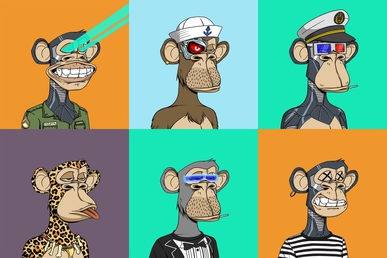
One of the best known early NFTs was the “Bored Ape Yacht Club”, a collection of cartoon ape images.

These were offered for sale to the public in early 2021 with the promise that each one was unique – and if you purchased one your name would be recorded on the blockchain as the official owner.
Artificial scarcity
The Bored Apes were based on initial artwork that was then computationally generated by an algorithm to ensure uniqueness, and to create scarcity. If you like digital art you can appreciate a copy as much as the original – as they are identical.
There are two main reasons that art has value – the intrinsic appreciation of the art itself (whether that be on execution or concept), and the value as an asset that you hope will increase over time.
One of the main problems with NFTs is that the current market is focused on the second part – hoping that whatever you pay for it today will be lower than what you might be able to sell it for in the future.
The Bored Ape Yacht Club additionally offered something that other NFTs didn’t – access to exclusive events only open to BAYC members, but these opportunities are viewed as extra perks rather than the main attraction. The main appeal of things like Bored Apes is the hope that they’ll increase in value over time.
But where’s the value? There is no inherent value in the JPEG itself – although each one is unique
Flaws in the system
To my mind there are three major flaws with NFTs.
Acre on the moon
Firstly, if you purchase an NFT the promise is that the details of your purchase is recorded on the blockchain – however as JPEGs can be sizeable the file itself is not recorded on the blockchain – all that’s saved is a link to an external website that records the details.
If that website (or the company behind it) fails your blockchain record is worthless.
It’s similar to other scams schemes that offer to sell you land on the moon – if the company that says you own it no longer exists how else to you prove “ownership”?
Environmental impact
Secondly, NFTs have a huge carbon footprint.
NFTs are generated on an underlying cryptocurrency (usually Etherum), and the processing involved in doing this uses a sizeable amount of energy.
Greater fool
And thirdly – NFTs are a fundamentally flawed system in what they are trying to achieve.
Yes, it would be great for digital artists to be compensated for the art that they produce – particularly if someone else is making money from it.
However NFTs traded today bare little relevance to the intrinsic value of the art itself. The value that is added is the hope that someone else (the greater fool) will purchase it from you at a higher price later.
Where does this leave cultural organisations?
Clearly, people are making money from NFTs – and income generation is tough for cultural orgs.
These organisations also have a potentially huge source of things that could be “NFT’d” – opening night of a performance? A digital copy of a sculpture? A photo of the artist with their art?
There are some contractual challenges (how is money split between organisation, promoter, artist, etc?) – but those are solvable.
The biggest risk is reputational damage – and this could come in many ways.
I expect people will purchase these NFTs for one of two reasons – either as an investment, or as a charitable donation.
If people purchase a cultural NFT as a charitable donation – why does it then need the complication of being an NFT?
If it’s an investment – how much liability does the cultural organisation incur? If it doesn’t appreciate in value – who is on the hook? And if the value does increase – surely that changes the NFT away from something that celebrates the art and supports the artist, into just another financial implement. But aside from that – what if the chosen technology provider goes bust? People are then left with a blockchain record that points to nothing – and may come asking for refunds.
 Matt Kirby
Leave a comment